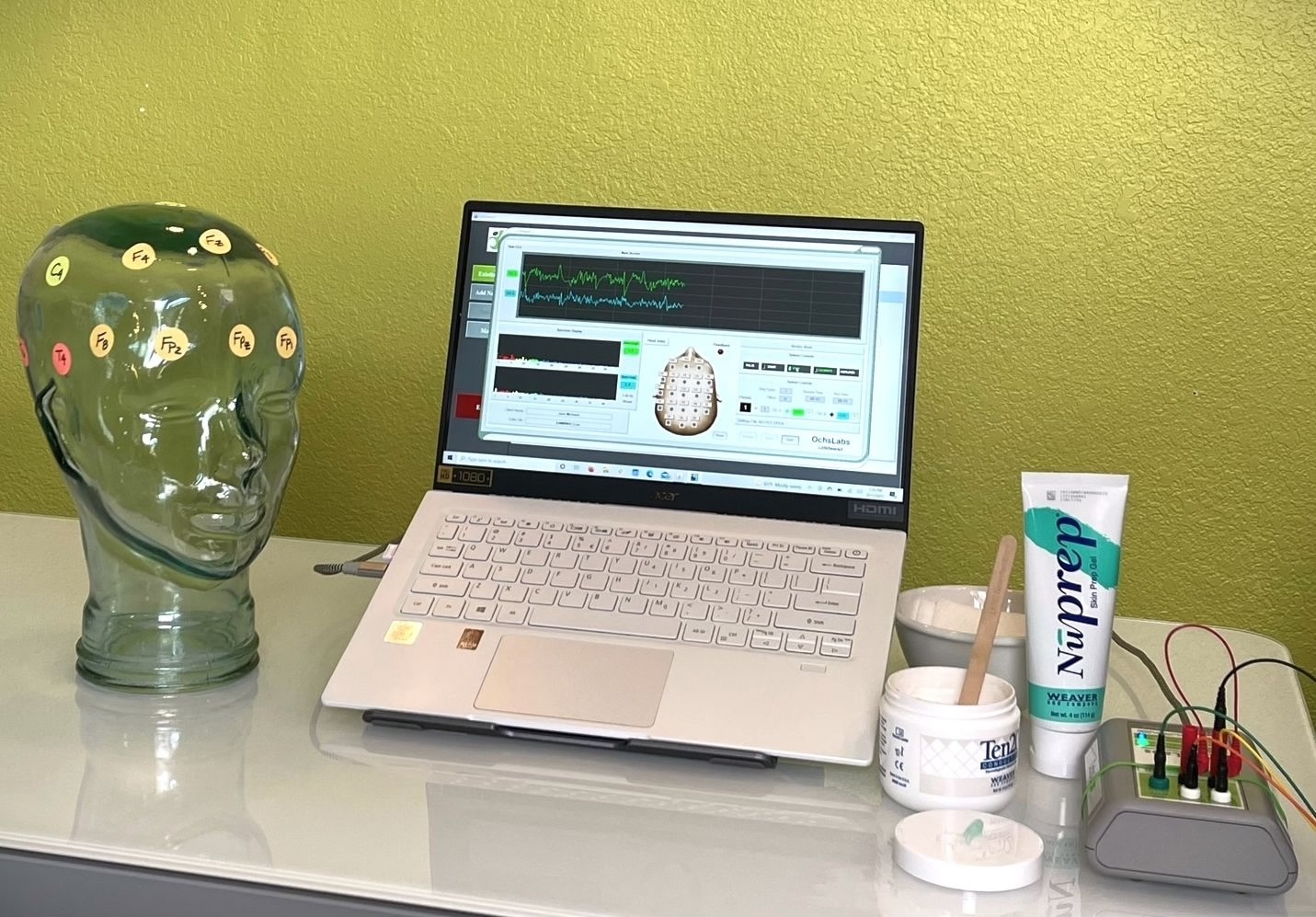
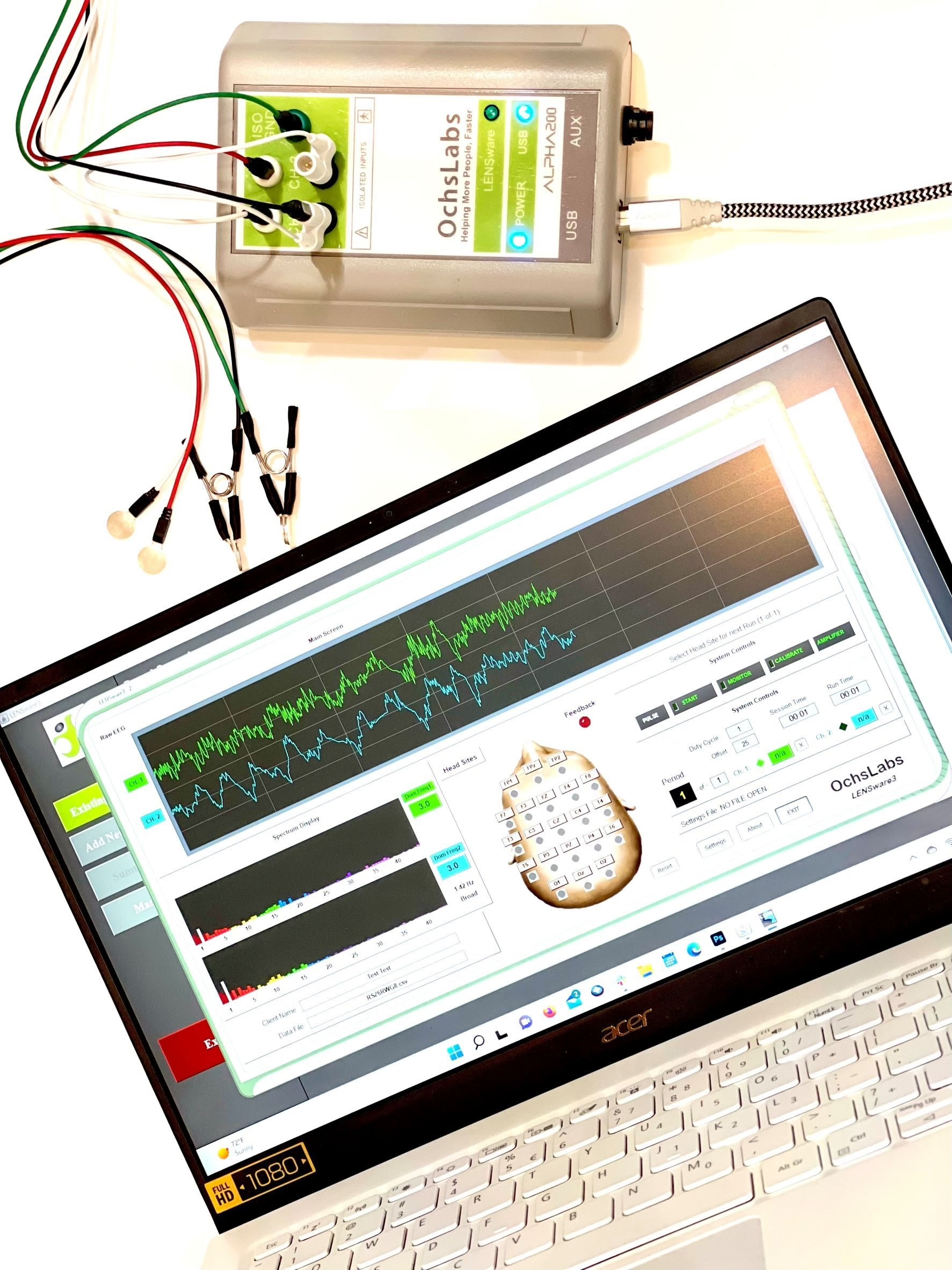
LENS is a gentle, non-invasive way to help your brain regulate itself — especially when you feel stuck, reactive, or overwhelmed and your nervous system keeps pulling you back into the same response.
A few small sensors on the scalp pick up your brain's electrical activity. No drugs, no shocks, nothing implanted. Most people notice things shifting before they fully understand why.
It doesn't force change — it helps your brain do what it already knows how to do, just with less noise and resistance.
Therapy works on the story. Neurofeedback works on the response. Together, things actually start to shift.
Neurofeedback may not be for everyone — but for the right person, it does what insight alone hasn't.
Anxiety or overthinking that won't turn off, no matter how much you've worked through it.
Reactions that hit fast — and take forever to come down from.
Patterns you can see coming — and still can't stop.
Feeling stuck in your body, not just your thoughts.
You understand your patterns. You can trace where they came from. And your body still reacts the same way.
You've done the reading, the journaling, the therapy. And then something happens — and your body reacts the same way it always has.
Your head got the memo. Your nervous system didn't.
That's the gap LENS works on — so what you know can finally land.
Not what most people expect. No headsets, no effort, nothing to "do". You just sit there while your brain does what it already knows how to do.
Quick setup. No prep needed. We map a few points based on what's actually bothering you.
A tiny signal — measured in milliseconds. You likely won't feel anything, but your brain responds to it.
Most sessions are surprisingly short. You can do it between meetings and go right back to your day.
Don't see yours? Email me directly — I read every one.
Most people are surprised by how little there is to feel during the session itself. You sit in a chair while electrodes attached to your scalp pick up your brain's electrical activity. The system reads it, and sends back tiny pulses that help your nervous system regulate itself. You might feel relaxed, occasionally tired, occasionally clear. Changes show up between sessions — usually in sleep, reactivity, focus, or general sense of calm.
Talk therapy works through insight, story, and conscious reflection. Neurofeedback works on the nervous system directly — the part of you talk can't easily reach. They aren't competing approaches; they're different layers of the same work. Many clients combine them.
Most clients notice shifts within 5-10 sessions, though it varies. We start with a Brain Map to see what's actually happening in your nervous system, then build a personalized protocol. Some people experience changes after the first few sessions; others need a longer run before things consolidate.
LENS Neurofeedback is non-invasive and well-tolerated. Some clients experience temporary tiredness or vivid dreams after a session as their nervous system recalibrates. There are no medications involved and no electrical current going into your brain — only readings coming out. It's been used clinically for over 30 years.
LENS Neurofeedback has been used clinically to support people working through anxiety, PTSD and trauma symptoms, sleep issues, focus and attention difficulties, emotional reactivity, and general nervous-system dysregulation. It isn't a treatment for a specific diagnosis — it's nervous-system support that often shifts symptoms across categories.
The best way to find out is the Brain Map — a one-time assessment that shows what's actually going on in your nervous system. From the map we can see whether neurofeedback would help, and if so, what the protocol should be. If it's not the right fit, I'll tell you, and we'll talk about what is.
We'll talk through what's going on, run a brain map, and figure out what your nervous system actually needs.

If you keep having the same fight in different forms, start here.
Most people don't realize they're doing these until it's already cost them something.
No spam. Unsubscribe anytime.
Drop your email and I'll let you know when this opens up.
I'll send a note the moment this opens up.
Pick a time — we'll talk through what's going on and figure out if we're a good fit.